

Buyer's Guide: How to Choose the Best Edge Finder?

Accurate workpiece setup is one of the most important steps in CNC milling. Before machining begins, operators must establish a reliable reference point so the machine can position cutting tools accurately relative to the workpiece. Even a small setup error can affect every subsequent operation, leading to dimensional inaccuracies, rework, and wasted machine time.
An edge finder is a simple yet essential tool for locating the exact edge of a workpiece and establishing accurate X- and Y-axis reference points. Whether you're operating a manual milling machine or a modern CNC machining center, choosing the right edge finder can improve setup efficiency, reduce errors, and support more consistent machining results.
This guide explains the main types of edge finders, the factors to consider when selecting one, and best practices for reliable operation.
What is an Edge Finder? What are the Main Types?
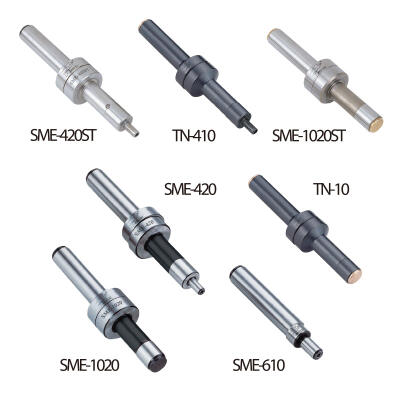
An edge finder is a positioning tool mounted in a spindle, collet, or tool holder to locate the edge of a workpiece accurately. Once the edge position is identified, operators can establish machine coordinates and set work offsets with confidence.
The most common type is the mechanical edge finder. It consists of a precision-ground shank and a spring-loaded contact tip. As the spindle rotates, the operator slowly moves the tool toward the workpiece until the tip visibly shifts or "kicks" off center. This movement indicates that the spindle centerline is positioned a known distance from the workpiece edge, allowing the operator to establish an accurate reference point.
In addition to mechanical models, manufacturers also offer:
- Electronic edge finders, which provide visual or audible signals when contact is made.
- Ceramic edge finders, designed for specialized applications involving magnetic materials or environments where magnetic interference may affect measurement accuracy.
- 3D sensors and probes, which can improve setup speed and convenience in certain CNC applications.
Each option offers different advantages depending on machining requirements, operator preferences, and shop-floor conditions.
For a complete technical breakdown of these different mechanisms, component architectures, and tool configurations, please refer to our previous article: Edge Finder: What It Is and Its Types
How to Choose the Right Edge Finder
Selecting the right edge finder depends on your machining requirements, equipment, workpiece materials, and production workflow. Consider the following factors before making a purchase.
1. Machining Precision Requirements
The accuracy requirements of your parts should guide your edge finder selection. For general machining tasks such as stock preparation, rough milling, or basic fixture setup, standard mechanical edge finders typically provide sufficient accuracy.
However, industries such as aerospace, mold manufacturing, precision tooling, and high-tolerance machining often require greater positional consistency. In these applications, precision-ground edge finders can provide improved repeatability and support tighter setup tolerances.
When evaluating products, pay attention to manufacturing quality, probe concentricity, and repeatability specifications rather than focusing solely on price.
2. Machine Type and Operating Environment
Mechanical edge finders remain a popular choice for manual mills because operators can easily observe the probe movement while standing close to the machine.
In enclosed CNC machining centers, however, visibility may be reduced by safety enclosures, coolant systems, or machine size. In these environments, electronic edge finders or 3D sensors can provide clearer feedback and make setup procedures easier and faster.
Choosing a tool that fits the operating environment can improve both setup efficiency and user confidence.
3. Workpiece Material and Surface Condition
Electronic edge finders rely on electrical conductivity to detect contact and therefore work best on conductive materials such as steel, stainless steel, cast iron, and aluminum.
For non-conductive materials, including plastics, composites, and certain engineering polymers, a mechanical edge finder is typically the better choice.
Surface condition is equally important. Rough, flame-cut, forged, or heavily oxidized surfaces may affect edge location accuracy. Whenever possible, establish a clean reference surface before locating critical work offsets.
4. Operational Habits and Efficiency Needs
In high-mix manufacturing environments where setups change frequently, electronic edge finders or 3D sensors can help reduce setup time and improve operator efficiency.
For job shops, prototype work, and general machining applications, many machinists continue to prefer traditional mechanical edge finders because they are affordable, durable, and easy to maintain. They require no batteries, contain few sensitive components, and perform reliably in demanding shop environments.
The best choice ultimately depends on balancing setup speed, budget, and operational preferences.
Operating Precautions
To maintain the factory calibration and structural integrity of an edge finder, operators must adhere to strict handling protocols. Misuse may permanently affect the tool's concentricity.
- Z-Axis Restriction: Never plunge an edge finder into the top surface of a workpiece to establish the Z-axis tool length offset. The internal tension spring and the lapped mating surfaces are engineered strictly to manage lateral and radial pressure. Applying vertical compressive force will crush the lapped faces, permanently deform the spring mechanism, or snap the internal retaining pin, destroying the tool's capability to read true.
- Surface Cleanliness: Operators must wipe the workpiece edge and the contact probe completely clean before spindle rotation. Even small chips, dried coolant residue, or burrs can affect positioning accuracy and lead to offset errors. If the rotating probe contacts debris rather than the base material, the resulting coordinate deviation will shift the machine offset, potentially pushing subsequent drilled holes and milled features out of tolerance.
- Magnetic Interference: Avoid utilizing a steel mechanical edge finder on magnetized workpieces. Residual magnetic force—often left behind by surface grinder magnetic chucks or magnetic lifting hoists—causes the steel probe to cling artificially to the workpiece edge. This magnetic drag resists the centrifugal force of the spindle, delaying the exact moment of the offset jump. This delay produces an inaccurate coordinate reading. Facilities processing magnetic materials utilize ceramic edge finders to resolve this physical interference.
Conclusion
Although small and relatively inexpensive, an edge finder plays an important role in machining accuracy and setup efficiency. Establishing accurate work coordinates helps reduce setup errors, minimize scrap, and improve overall productivity throughout the machining process.
Choosing the right edge finder depends on several factors, including required accuracy, machine type, workpiece material, and production workflow. By selecting a tool that matches your operating environment, you can achieve faster setups and more consistent machining results.
Li-Hsun engineers and manufactures precise positioning tools designed for demanding shop floor environments. To equip your facility with durable, high-tolerance setup instruments capable of reliable repeatability, view our complete range of Edge Finders. Li-Hsun is one of the leading manufacturers of edge finders in Taiwan.
To learn more about our complete selection of edge finders or to discuss the best solution for your specific machining requirements, please reach out to our team today.